EU AI Act Annex IV Technical Documentation in Practice
Annex IV works as a living engineering file, not a one-time legal filing.
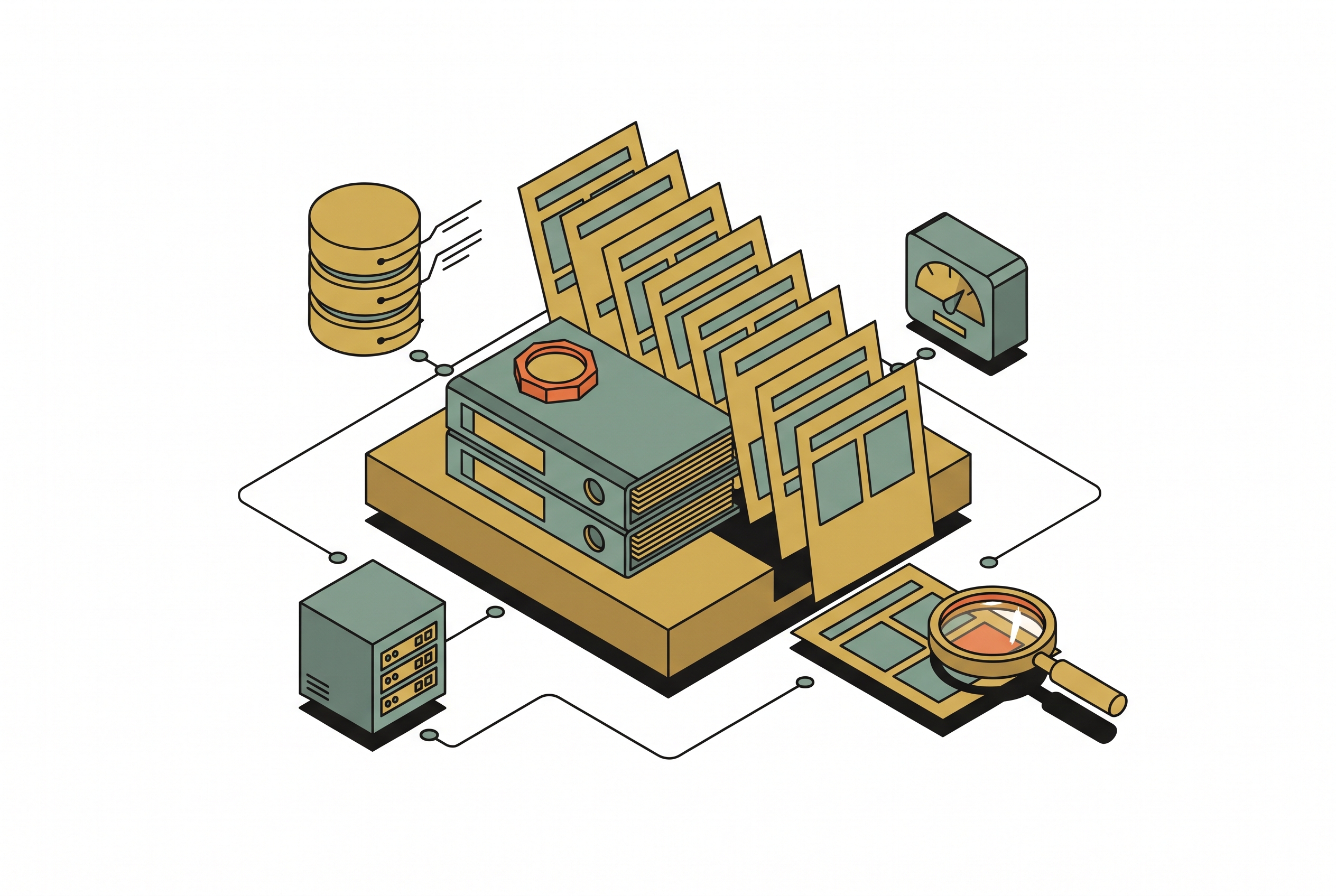
EU AI Act Annex IV technical documentation is an engineering discipline. A compliant file must describe the system that is actually deployed, with evidence generated, version-controlled, and maintained throughout its lifecycle. The practical task is therefore to build a workflow that updates the documentation whenever the system changes in a way that affects conformity.
What Annex IV actually is and who it binds
Annex IV specifies the system-specific technical documentation that providers of high-risk AI systems must prepare before market placement or entry into service. The provider is the entity that develops and places the system under its name or trademark. The obligation attaches to each system separately. An organisation operating three high-risk systems needs three files. Deployers do not inherit the provider’s preparation obligation simply by using a system, although verifying that compliant provider documentation exists is part of deployment readiness.
The file must remain available to market surveillance authorities on request, without notice, and be retained for a substantial period after market placement. It also underpins the conformity process. Without it, a provider cannot issue a declaration of conformity, affix CE marking, or register in the EU database. Where the consolidated-documentation requirement applies to AI safety components in regulated products, one set of documentation must cover both the AI Act and the sectoral legislation that applies.
Why treating Annex IV as a legal filing produces a file that is wrong before the ink dries
A filing exercise gives a finished account of how things were at one point in the past. Annex IV requires something different. The documentation must remain current throughout the system’s lifecycle, including after retraining, version updates, or changes to intended purpose that affect conformity. A legal team can review the evidence, but a document maintained separately from engineering changes will drift from production reality.
This is a category error. The file must show compliance with Articles 8–15 and give authorities and notified bodies enough information to assess it. An accurate description of an earlier release does neither for a materially changed deployment. Waiting for a regulatory request is not a remedy, because the documentation must already reflect the system when that request arrives. The corrective is to build each part of the file from the engineering work that establishes and maintains the system’s conformity.
Section 1 — Writing a general description that bounds the system precisely enough to test
The intended-purpose statement establishes the boundary against which the rest of the file is assessed. Precision here is a testing requirement. “The system responds to employee queries about company HR policies” defines a function that can be assessed, while “the system supports HR operations” leaves its authorised scope open. A bounded statement also establishes what the system is not intended to do, rather than leaving later risk assessments to infer that boundary.
The general description must then show how that function fits into the environment where the system runs. It includes specific use cases, user groups, hardware and software requirements, external system interactions, distribution through SaaS, embedded software or API, and deployer instructions under Article 13. For the safety components covered by this requirement, it must explain the product they are part of and what the AI component does within it. Version history must show how each release links to earlier versions. A concise system identity sheet makes these facts accessible to an external assessor, while every unresolved ambiguity in that sheet reappears as an ambiguity in the risk section.
Section 2 — Documenting design decisions and data governance as auditable engineering choices, not post-hoc narrative
Section 2 requires justification. Its architecture documentation must explain system logic, algorithms, component interactions, computational resources, classification decisions, and what the system is optimised for. It must also record assumptions about intended users and the technical trade-offs made to meet the requirements. Decisions to rule out other architecture options need their own contemporaneous record.
Data governance requires a separate discipline and owner. Training, validation, and test datasets need documented provenance, collection methods, preparation, labelling, cleaning, bias examination, and known limitations with the measures taken to address them. A data register must preserve sourcing and transformation history, with proof of consent or another legal basis for each dataset. This is where Annex IV and GDPR compliance intersect directly. Without traceability, the provider cannot substantiate the account of how data was obtained and used.
Model cards and datasheets turn these records into assessable artefacts. They do not replace the underlying evidence. Relevant subgroup results must explain discrepancies rather than conceal them within an aggregate score, and pre-determined changes need documentation of the technical solutions that will preserve compliance. Recording this material during development also avoids an expensive reconstruction exercise in which the final implementation survives but the reasoning behind it does not.
Section 3 and the human oversight evidence gap that most deployments leave open
A cloud platform’s documentation can describe its monitoring capabilities, but it cannot identify who reviews a particular deployment’s outputs, when they review them, or what requires intervention. Section 3 must make that process explicit. It needs monitored metrics, review cadence, escalation triggers, audit-log retention, intervention mechanisms, and the roles and competencies needed to exercise oversight.
Article 14 connects these records to the ability of a natural person to monitor, interrupt, and override the system. Availability alone is not sufficient evidence. The file must describe who the operators are and how they are trained, which oversight measures have been validated, and how interventions are carried out and logged. A human oversight procedure, an intervention log template, and escalation triggers with named owners make the distinction concrete. After deployment, the intervention log becomes a maintained operational record.
Sections 4 and 5 — Risk management and performance evidence that must reflect the deployed system, not the test environment
Section 4 addresses what could go wrong and what has been done about it. It needs the risk assessment methodology, identified risks and their severity, implemented mitigations, and evidence that those mitigations work. Context determines the assessment. An automotive intrusion detection system needs clear links between safety-related risks and the design decisions meant to address them. A risk matrix and mitigation plan must therefore cross-reference the architecture, and the risk work must be complete before the technical file is finalised.
Section 5 addresses how well the system works and under which conditions. Its test report needs accuracy, error rates or recall as appropriate, robustness, cybersecurity protection, benchmarks, and comparisons against a baseline. Acceptable thresholds must precede the evaluation. Relevant subgroup results, including gender, age, or origin where applicable, must expose and explain discrepancies hidden in headline accuracy. Evaluation must also cover the conditions in which the system will actually run, because a clean held-out test result does not show how well it works in production.
Neither section can be supplied by generic platform documentation. The deployment defines the risks and acceptable performance, so changes to the system or its operating context can invalidate the evidence. Where adversarial risk is material, a cybersecurity audit record supports the performance account.
Section 6 through Section 9 — Transparency, standards, conformity, and the post-market monitoring plan that most teams underestimate
Section 6 uses the recorded limitations to give people instructions and warnings they can act on. The audience distinction is important here. Article 13 instructions must equip the organisation deploying the system to understand what it can and cannot safely do. A manual and transparency sheet should also explain how to give feedback. Section 7 then records the harmonised standards applied, or the common specifications and other technical solutions used where those standards do not exist or were not fully followed.
Section 8 contains the EU declaration of conformity. It is an output of the conformity process. The declaration cannot be issued before the other documentation is complete, and it supports CE marking and EU database registration. Section 9 requires a post-market monitoring plan that works in practice to address failures that occur only in production.
That plan must describe continuous monitoring, feedback collection, update and maintenance procedures, and incident management, including the reporting deadline applicable to serious incidents. The plan must exist before operation begins. Its execution then produces a maintained incident log, while changes to the system require the plan itself to remain current. A register of significant modifications must record each change, why it was made, how it affects compliance, and evidence that the risks have been reassessed. If those operational mechanisms do not exist, the gap is not missing prose but missing infrastructure.
What production-ready Annex IV documentation actually requires as an engineering workflow
The practical response is to make documentation an output of the processes that change the system. Dependencies determine the sequence. Data governance records must exist before training, risk management must precede finalisation of the technical file, and validation reports must precede deployment. Change management must be in place and working before the first update after deployment. These are release gates.
CI/CD integration can make the work that produces evidence part of those gates. When a model is retrained or a component updated, the same workflow should trigger the relevant documentation revision. Documentation versions should mirror system versions. Each significant modification needs a revised record, an updated risk assessment, and an entry in the modification register. Automation can produce evidence, but named owners are still responsible for making sure it is adequate.
Ownership must follow the work being documented. The data records need a data owner, the risk file a risk owner, and post-market monitoring an operational owner responsible for maintaining the incident log. These duties matter especially for agent deployments because scope, data access, and human oversight can change between deployments. Each is a documentation event. The workflow is production-ready only if it can bring the file into line with a change before the next regulatory request arrives.
Where Annex IV intersects with operational AI governance in the verticals most exposed to high-risk classification
Researchers at the Luxembourg Institute of Science and Technology and Research Institutes of Sweden applied the full Annex IV framework to an automotive AI-based intrusion detection system in an arXiv preprint. Their structured risk identification classified it as preliminarily high-risk because of safety-critical vehicle functions. The case makes the documentation boundary concrete. Its artefacts described the architecture, model pipeline, deployment targets including ECUs and gateways, and the dataflow from CAN/Ethernet packet capture through preprocessing, ML inference, explainability, and alert routing. The architecture and risk records needed clear cross-references, which separate accounts of the same system would not provide.
Operational audit trails from contract review, regulatory monitoring, and due diligence must be structured to meet the documentation requirements. Human review needs its own account. For a contract review agent that flags exceptions, that account identifies reviewers, their qualifications, and how decisions are recorded. Where a deployment falls within the high-risk regime, the platform’s documentation cannot substitute for an assessment of its legal operating context.
Healthcare makes data traceability equally concrete. Prior authorisation agents may detect when authorisation is needed, assemble clinical documentation from the EHR, submit it electronically, and track status. Monitoring and oversight begin with operational use. Provenance, consent records, and bias mitigation evidence must remain traceable through model updates. In each of these settings, the provider still has a duty to prepare documentation, but the organisation running the system knows things about the deployment that generic vendor materials cannot supply.
Starting the Annex IV file before the system is built, not after it ships
Teams should put records of provenance, legal basis, and bias examination in place before training, then write an intended-purpose statement clear enough to rule out unauthorised uses. Both define downstream evidence needs. Design rationale should be recorded as decisions are made, and performance thresholds and acceptable risk tolerances should be set before validation. Each section should have a named owner before any external review begins.
Readiness assessments and AI Operations Audits can support this work when they are aligned with the documentation process. Their value is in exposing gaps while the team can still address them during development. The first deliverable is therefore not a polished file. It is a bounded purpose, traceable data records, and an assigned workflow that produces the next required artefact at the right point in development. That workflow must then remain attached to every release that changes the system’s conformity.
Every new piece from Hallucination Report, as it's published.
Follow