Automated Citation Verification for AI-Produced Research Reports
AI models are hallucinating citations faster than humans can catch them.
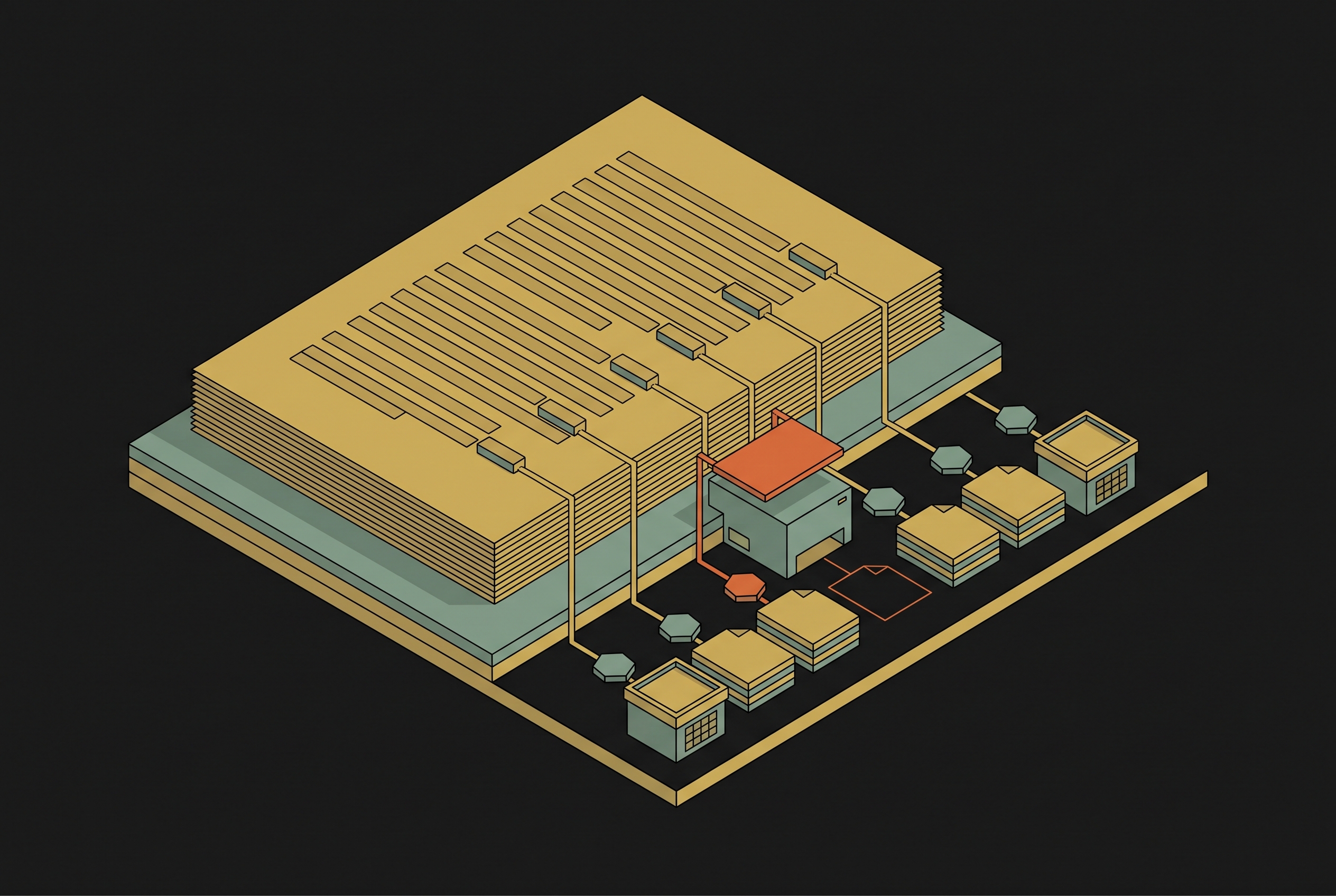
Automated citation verification for AI-produced research reports is becoming an operational requirement. As citation volume outgrows human review, organizations need systems that test whether sources exist and whether they support the claims attached to them. Those systems must also expose uncertainty, measure their own errors, and preserve human judgment where semantic questions remain contested.
Why citation integrity is failing faster than human review can respond
Ansari’s NeurIPS 2025 taxonomy found fabricated citations in 53 published papers at one of the world’s most selective AI conferences. Each paper had been reviewed by three to five domain experts. The case exposes a breakdown in the review process, rather than simply a need for more knowledgeable reviewers.
The 2026 audit of papers from ACL, NAACL, and EMNLP found that HalluCited papers, which contain at least one hallucinated reference, grew by more than an order of magnitude from 2024 to 2025. That trajectory outpaces any plausible expansion of manual checking. Ansorge (2026) identifies two compounding pressures behind it. Publication mills operating under “publish or perish” incentives have generated fictitious citation apparatus at industrial scale since the 1960s, while LLMs now produce similar failures without deliberate intent.
Fabricated citations have appeared in U.S. government reports requiring corrections and in professional consulting output requiring a partial refund. For organizations using AI to produce research, checking references must be more than a task reviewers do when they have time to spare. The output is scaling faster than that review model can accommodate.
Why hallucinated citations are structurally hard to catch by hand
Ansari’s taxonomy documents compound failure modes in every hallucination in the NeurIPS dataset. The most common pattern paired Total Fabrication with Semantic Hallucination, sometimes also involving Identifier Hijacking. A reference could sound relevant, invoke familiar author names, and offer a working-looking identifier while remaining invented. Plausibility operated across several dimensions at once.
The taxonomy distinguishes five categories, namely Total Fabrication, Partial Attribute Corruption, Identifier Hijacking, Placeholder Hallucination, and Semantic Hallucination. Total Fabrication made up nearly two-thirds of cases, while Partial Attribute Corruption made up roughly a quarter. These categories defeat different verification shortcuts. Recognizing an author does not establish that the title exists, and finding an identifier does not establish that it belongs to the cited work.
Rao, Wong, and Callison-Burch (2026) found that deep research agents generated substantially more citations per query than search-augmented LLMs and hallucinated URLs at higher rates. Their analysis points to retrieval architecture, rather than volume alone, as the driver. Some models fabricated every non-resolving URL, while others produced genuine sources affected by link rot.
Human behavior compounds these technical ambiguities under time pressure. Researchers say they check a high share of references, yet many copy-paste BibTeX entries without checking, and most reviewers do not check references closely. Ansorge describes “citation inflation” as a source of cognitive overload. As reference lists expand, each citation receives a smaller share of a reviewer’s finite attention, making tooling a response to workload that complements diligence.
Why URL-checking and reference-matching are necessary but not sufficient
Rao et al.’s urlhealth tool demonstrates the value of automated existence-checking. In agentic self-correction experiments, models equipped with the tool reduced non-resolving citation URLs by between six and seventy-nine times, to under one percent. That is a substantial improvement over unassisted generation. It catches errors that checking a few references by hand leaves unchecked.
The tool also distinguishes hallucinated URLs, which have no Wayback Machine record at any point, from stale URLs that once existed. Without it, a checker treats ordinary link decay as evidence of fabrication. Those false positives can weaken trust in the checking process even when the underlying URL test works correctly.
However, a valid address establishes very little about evidential support. A citation can resolve to a real paper by a real author at a real venue and still misrepresent the paper’s findings. Ansorge describes miscitation as historically well-documented and more widespread than outright fabrication. Reference matching therefore provides a foundation for verification.
Ding et al.’s autonomous research agent survey identifies a related gap between accessible output and verifiable research. Code release is common among AI scientist systems, but reproducibility-grade artifacts, including seeds and execution traces, remain scarce. Novelty-verification methods are also scarce. The availability of a research artifact does not establish that a reviewer can reconstruct the evidence behind its conclusions.
What semantic auditing actually involves and where current methods fall short
He et al. (2026) identify three obstacles to classifying whether a citation supports its associated claim. Scope mismatch occurs when the claim includes content the source was never meant to support. Perspective mismatch occurs when the claim frames a finding differently from the source. Proposition entanglement bundles several assertions into a single claim that needs separate verification. Each problem complicates the link between an assertion and its evidence.
Their Claim-Normalized Citation Verification framework, or CNCV, adds normalization before evidence retrieval and citation classification. The normalization stage rewrites the raw claim to isolate what the cited source should be able to demonstrate. Evidence is then retrieved against that normalized claim. This changes the input to the verification process, rather than asking a more capable classifier to compensate for poorly matched evidence.
CNCV materially improves macro F1 over the prior two-stage framework across both encoder and generative LLM classifiers. The gains are driven by evidence quality. That finding locates an important bottleneck in retrieval. A judgment can only be as useful as the evidence selected for the proposition being judged.
Ansorge proposes agentic AI for deep semantic auditing paired with mandatory authorial citation reports. Authors would classify each citation, making its intended role explicit rather than leaving a verifier to infer that role from prose alone. The agent and disclosure serve complementary purposes. Neither resolves the field’s broader measurement gap, because no current benchmark audits the full chain from claim to citation to source passage and the reliability of the source itself.
Why automated verification fails in production even when it works in benchmarks
CiteAudit reports that its results differ between generated benchmark cases and real-world cases. Real documents make claims in different ways and draw on source repositories that vary in quality. A system that performs well on a test set still needs evidence that its results transfer to the documents an organization actually produces.
Putting a system to work also depends on its infrastructure, governance, security, and the ability to measure return on investment, as well as the quality of the model. An agent needs evaluation frameworks, production monitoring, and dedicated ownership to function as a dependable control. It is hard to tell how much value the agent adds without measuring its false-positive and false-negative rates. A demonstration can show useful capability without showing how reliably that capability operates over time.
Non-determinism makes semantic verification particularly difficult to govern in practice. An agent may return different verdicts on the same citation across runs, especially when the distinction between support and misrepresentation is borderline. That variability affects how much confidence an organization can place in a decision. Benchmark averages do not show whether a disputed citation will get the same verdict each time.
Rao et al. also show that urlhealth’s effectiveness depends on the model’s tool-use competence, so the reported range of improvement cannot be separated from its deployment configuration. In their dataset, the share of non-resolving citations varies widely from one academic field to another. Calibration on business documents therefore does not establish comparable performance on theology or medicine without domain-specific tuning.
What a production-ready citation verification system actually requires
For organizations deploying these workflows, the practical requirement is a verification layer that checks existence, semantic alignment, and source reliability within a defined governance process. Existence-checking should distinguish fabrication from link rot before downstream semantic assessment. It must also cross-reference authors, titles, venues, dates, and identifiers.
The semantic layer should normalize claims before retrieving evidence. This addresses the scope, perspective, and entanglement problems that can otherwise produce false-positive “supported” verdicts. Ansorge’s proposed mandatory citation reports would add structured authorial disclosure to that process. By classifying each citation before submission, authors would create a paper trail describing its intended use, giving the verifier more than raw prose against which to assess alignment.
Human review must remain part of the design. Systems should flag citations that fall below a confidence threshold and leave the final verdict on those uncertain cases to people. The threshold defines where mechanical checking ends and reviewer judgment takes over. This preserves expert attention for contested interpretations without requiring reviewers to inspect every bibliographic detail from scratch.
Production monitoring should track false positives and false negatives over time, with ownership assigned for evaluation and operational performance. Those measurements support improvement, auditability, and a credible assessment of return on investment. They also need to reflect the organization’s actual documents. Because no end-to-end benchmark covers the full grounding chain, organizations must build test sets for their own domains and measure how well systems work in practice before using published results to predict how accurate those systems will be when deployed.
Where the objection to automated verification has merit — and where it does not
The strongest objection is that good aggregate scores can conceal semantically incorrect individual citations. Evaluation built around verifiable answers does not transfer cleanly to long-form reports containing multiple claims. CiteAudit’s benchmark-to-reality gap provides evidence for that concern, though the gap alone does not show that a tool has no value in practice. Ding et al. identify the deeper problem as claim verifiability across the research lifecycle, with citation failures exposing weak auditability by design.
That objection rules out treating automation as conclusive authority. It does not justify leaving reliable verification layers undeployed. The relevant comparison is the current human baseline, in which expert reviewers missed fabricated citations in one percent of accepted NeurIPS papers. Rao et al.’s self-correction results show that even the weakest setup they tested did much better than unassisted generation.
The defensible approach is layered risk reduction. Existence-checking catches fabricated references that reviewers miss under time pressure, while semantic auditing flags misrepresentation that valid URLs cannot reveal. Human reviewers then judge uncertain cases without having to repeat mechanical checks on every citation. Each layer addresses a different failure mode without claiming to eliminate the need for the others.
What the shift from existence-checking to semantic auditing means for organizations deploying AI research workflows now
Government report corrections, a six-figure consulting refund, and legal sanctions in Mata v. Avianca show that organizations already face consequences when citations are made up. The exposure grows with output volume. Rao et al. found hallucinated citation URL rates of 3 to 13 percent across commercial models and agents. Even if the per-citation rate stays flat, using AI research workflows more widely raises the total number of references that may be made up in the work organizations produce.
This makes ownership as important as tool selection. Organizations that have solved the broader agent-scaling problem have created a dedicated AI operations function responsible for evaluation frameworks, production monitoring, and incident response. Citation verification needs that governance structure to function as a control. Without it, a checker can produce verdicts without an accountable process for assessing their reliability or responding when they fail.
An AI Operations Audit should check the citation verification layer itself. It should establish whether URL checks distinguish fabrication from link rot and whether semantic alignment checking is operational or merely planned. It should also examine whether the human-review threshold is documented and whether false-positive and false-negative rates are tracked in production. These are observable differences between a deployed control and an intended capability.
Without a benchmark, organizations need to build evaluation infrastructure around available tools while keeping the limits of those tools explicit. Organizations that do so can assess verification performance against their own research workflows. Those that leave citation checking as a quality-assurance afterthought accept growing output without a corresponding means of judging whether its evidence supports its claims.
Notes
- Compound Deception in Elite Peer Review: A Failure Mode Taxonomy of 100 Fabricated Citations at NeurIPS 2025
Provided the NeurIPS 2025 taxonomy of fabricated citation failure modes, including the five categories and their prevalence figures.
- Frontiers
Provided the 2026 audit findings on hallucinated references across ACL, NAACL, and EMNLP, and the analysis of publication-mill and LLM pressures behind citation inflation.
- Detecting and Correcting Reference Hallucinations in Commercial LLMs and Deep Research Agents
Provided findings on deep research agents' hallucinated URL rates and the urlhealth tool's self-correction results reducing non-resolving citations.
- Autonomous Research Agents:A Survey of AI Scientists and the Verification Gap
Provided the survey of autonomous research agents identifying gaps in reproducibility artifacts and novelty-verification methods.
- Understanding before verifying: Claim normalization for automated citation verification
Provided the Claim-Normalized Citation Verification framework and its finding that claim normalization improves macro F1 by improving evidence retrieval quality.
- CiteAudit: You Cited It, But Did You Read It? A Benchmark for Verifying Scientific References in the LLM Era
Provided evidence of the benchmark-to-reality gap in citation verification performance and the broader claim verifiability framing.
Every new piece from Hallucination Report, as it's published.
FollowGuide
- AI Hallucination Examples: Real Cases and the Checks That Catch ThemDocumented AI hallucination examples from courts, customer service, government, publishing and healthcare: what the AI produced, what was true, and the check that would have caught it.
- What Is AI Hallucination? Meaning, Causes, Types and How to Catch ItWhat AI hallucination means, why language models produce it, the six kinds to watch for, and the checks that catch a hallucinated answer before anyone relies on it.