AI Act Accuracy and Robustness Metrics for Regulated-Industry Agents
Article 15 turns accuracy into a production duty, and this shows how to prove it.
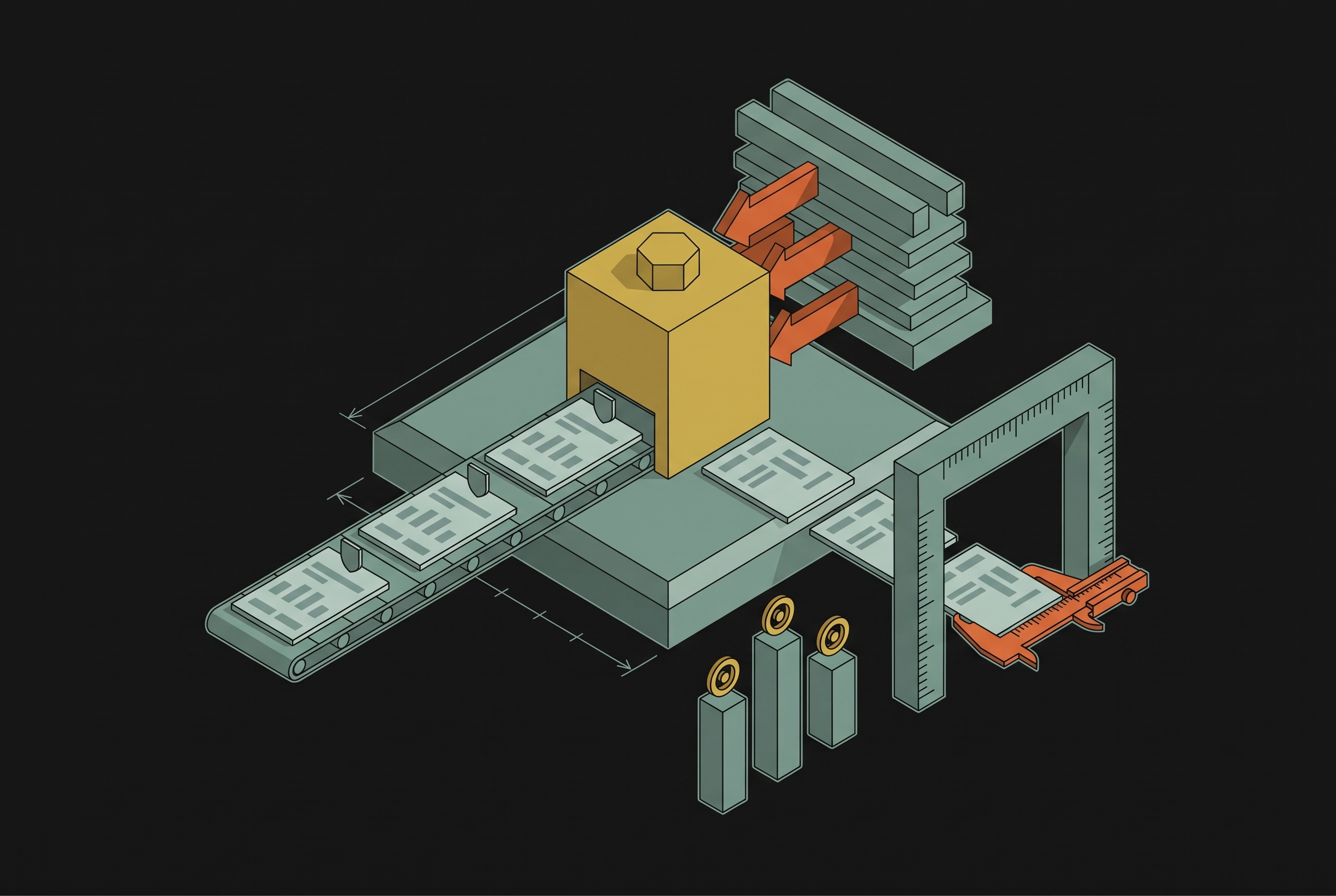
Article 15 of the EU AI Act makes accuracy and robustness lifecycle obligations for high-risk AI systems. For regulated-industry agents, compliance therefore depends on how teams run them in production, linking declared performance thresholds to actions they can trace, continuous monitoring and planned remediation. Teams must make those connections demonstrable while agents operate on changing data and act through tools.
What Article 15 actually requires from production agents
Article 15 links three obligations for high-risk AI systems, namely appropriate accuracy, robustness against errors and adversarial manipulation, and cybersecurity. Each applies throughout the system’s operational lifecycle. A successful pre-deployment evaluation is therefore only a starting point. The system must meet the required performance in use as well as on a test set before release.
Continuous-learning systems face an additional safeguard requirement because ongoing learning can itself introduce bias or degrade accuracy. Robustness must also cover more than the usual changes in inputs. It includes resilience against attempts to alter outputs, so adversarial manipulation belongs within the performance-assurance framework. The Act identifies technical redundancy solutions, including backup and fail-safe plans, as permissible ways to achieve robustness.
The AI Omnibus, in force since 27 July 2026, moved the high-risk obligations to 2 December 2027 for Annex III systems and 2 August 2028 for Annex I systems. Once the obligations apply, fines can reach 3% of total worldwide annual turnover, with a lower cap for SMEs and start-ups. Regulated-industry agents in healthcare, legal and financial services fall mostly under Annex III, but they must be checked against its specific use-case list to determine their classification. The sector label alone is not enough. The deferral changes the planning horizon without reducing the work, because data lineage, oversight interfaces and production monitoring have substantial engineering lead times.
Why AI agents break the assumptions Article 15 was written around
Article 15’s performance-assurance model assumes that teams can test and measure how a system behaves and show that it stays within the boundaries they have assessed. Stochastic, tool-using agents strain that assumption at a structural level. Their behavior is not exhausted by a model’s individual outputs. Assurance must also address the actions through which an agent pursues a task and the external content it encounters while doing so.
Gardhouse, Oueslati, and Kolt’s July 2026 analysis identifies robustness as the Article 15 requirement closest to the concerns raised by agents, while finding the provision’s performance proxies conceptually ill-suited to them. Unlike accuracy, robustness does not presuppose a fixed standard against which outputs can be graded. Its application to agents nevertheless needs a broader scope. Prompt injection resistance, for example, concerns the ability to detect and reject attempts by external content to redirect behavior.
Multi-agent orchestration adds a separate accountability problem. No single component owns the final output when responsibility is distributed across a chain of agents. This many-hands problem conflicts with a governance model centered on an identifiable system artifact whose performance can be assessed in isolation. Component evaluations still have a role, but they cannot substitute for action-level traceability across the chain. Without that traceability, the compliance record lacks the connections needed to explain how the system reached its result.
The four techno-normative choices that determine what "accuracy" means for a given deployment
Uberti-Bona Marin et al.’s April 2026 FAccT '26 paper identifies four choices that determine how accuracy is defined and assessed. These are choosing metrics, balancing them, measuring them against representative data and setting acceptance thresholds. The Act does not supply a universal specification. Enterprises must make and document these choices for the intended deployment, because different choices can produce different evaluations of the same model. Each embeds assumptions about acceptable errors, the distribution of risk and competing objectives.
The first choice is metric selection, illustrated by a skin-cancer detector that always predicts the absence of melanoma and achieves high aggregate accuracy because melanoma is rare in the general population. Such a system has zero clinical utility, making sensitivity and specificity more useful for diagnostic or triage agents than aggregate accuracy alone. The second choice is how to balance metrics when their objectives conflict. False negatives mean missed diagnoses, while false positives mean unnecessary interventions. Those consequences are asymmetric, so the balance is not purely mathematical.
The third choice concerns representative data, which must reflect the operational distribution. For agents that use live, changing data streams, that distribution shifts, so a fixed test set cannot show that they continue to comply. The fourth choice is the acceptance threshold. It defines the performance the enterprise considers appropriate for the intended purpose, while automotive standards such as ISO 26262 and ISO/SAE 21434 partly constrain that decision in their respective domains.
Precision in clause identification is measurable, but accuracy in legal reasoning and judgment is not measurable in the same way. The limited scope of strong document-review results leaves an unresolved Article 15 tension over assurance across legal tasks.
What continuous monitoring actually requires in a production agent environment
A production monitoring architecture starts with an inventory of agents and the ability to trace their actions. Only a small minority of enterprises can fully do both. Without that foundation, the enterprise cannot establish what its monitoring covers or attribute behavior across an agent chain. Teams therefore need to build more than standard ML observability, which may show how good the outputs are without explaining the decisions and actions that led to them.
Immutable audit trails must record model outputs and what agents do at each decision. Persistent identity management makes individual agents identifiable across multi-agent orchestration and allows their outputs to be attributed in audit documentation. Both support incident investigation and regulatory review. Recurring scenario-based incident testing then provides a way to assess behavior beyond the conditions covered at initial deployment. Monitoring and testing serve different purposes, so neither replaces the other.
The update mechanism must also be monitored because ongoing learning can introduce bias or degrade accuracy even when the original system passed evaluation. The lesson for engineering teams is to treat learning-loop safeguards as a separate part of the architecture. During both learning and execution, lineage must link the agent’s role and task to the record of what it did. That completeness allows a detected breach to become an explainable incident.
When performance drifts: what Article 15 remediation obligations look like in practice
When performance falls below declared levels, the obligation is remediation or withdrawal. The declared threshold becomes the legal standard. The enterprise must be able to demonstrate both that it detected the breach and that it responded. Deliberately underdeclaring performance to create headroom introduces a different compliance problem if the documentation misrepresents intended performance.
The operational implication is to design remediation pathways before deployment. The Act’s recognition of backup and fail-safe plans provides a basis for planning how the system will operate when its assessed performance no longer holds. These pathways should not be improvised during an incident. Their documentation must also distinguish data-distribution shift from adversarial interference because the causes require different technical responses. Where prompt injection or external manipulation caused the degradation, restoring performance alone is insufficient without closing the attack vector.
Baseline capture makes that response demonstrable. A declared threshold needs a pre-deployment measurement behind it, and an enterprise that skipped this step cannot show that its threshold was grounded in measured evidence. The same discipline supports the business case. Capturing cost per case, average handling time, error rate and monthly volume before deployment establishes the basis for assessing ROI while supporting compliance baselining. Those business measures connect operational value to a documented starting point.
A deployment can therefore perform well today and still have a weak compliance position. Current results do not retrospectively establish the evidence on which the original acceptance decision rested. For teams preparing a deployment, the practical lesson is to capture the baseline before release and connect it to the declared thresholds and remediation plan. This makes performance assessment and incident response parts of the same process.
How regulated-industry verticals experience these requirements differently
Healthcare makes the consequences of metric selection explicit. The Act classifies medical diagnosis, patient triage and treatment planning as high-risk uses, with classification tied to the use case. Administrative workflow AI needs a different performance frame. Penn Medicine’s use of an ambient AI clinical documentation tool reduced time in notes and improved same-day note closure and after-hours documentation. These outcome-linked measures illustrate the form of evidence appropriate to a documentation workflow.
Penda Health uses a different kind of evidence for clinical use. Clinicians using AI Consult made measurably fewer diagnostic and treatment errors across a large volume of visits, with independent review of a randomly selected subset. The review structure is important to the compliance argument. It links the claimed improvement to a check of clinical outcomes as well as the tool’s own output measures. That combination can support both an ROI demonstration and robustness evidence in a compliance file.
Legal deployments require documentation that makes the boundary of evaluation explicit. Measurable clause identification and change tracking support claims about document-review tasks, but they do not validate the agent’s judgment across a broader legal workflow. The compliance file must acknowledge this limit. Otherwise, an accurate statement about a narrow capability can become an unsupported assurance about the deployment’s intended purpose.
Automotive deployments face overlapping assurance frameworks. ADAS and functional-safety applications must satisfy ISO 26262 for functional safety and ISO/SAE 21434 for cybersecurity engineering in addition to AI Act obligations. Existing sector standards help set thresholds, while the Act also requires documentation and monitoring. Planning AI has a different compliance profile. BMW Group’s Virtual Factory uses digital twins for collision checks, layout and logistics simulation across multiple production sites, where relevant metrics concern simulation fidelity and planning-decision quality.
Mercedes-Benz uses AI-controlled process engineering in top-coat booths. Its measurable energy reduction shows how the industrial process performs against a defined target. That target makes accuracy easier to specify. Monitoring such process outcomes is structurally easier than monitoring stochastic agents whose actions and operating context can vary.
What an Article 15-ready AI operations audit looks like before the December 2027 deadline
An AI operations audit turns these obligations into a production-readiness assessment. Its readiness dimensions include data, infrastructure, talent and skills, process, and strategic alignment. These connect to technical documentation, quality management, data governance and human oversight. Governance is the critical failure point. Gaps in ownership, action inventories, traceability and monitoring undermine both production deployment and the evidence needed for compliance.
The assessment should score each dimension separately instead of collapsing readiness into a single composite score. An enterprise may be prepared for low-risk productivity AI but unprepared for customer-impacting agents or regulated decision support. Its audit should preserve that distinction. The decision output is an approved-lanes and blocked-or-deferred map, supported by remediation priorities rather than a general statement that the organization is ready for AI.
The evidence output must go beyond a score. Technical documentation should link the roles and tasks of agents to dynamic audit logs, while orchestration playbooks should set human review gates. Each production agent also needs measurements of its baseline performance. A remediation roadmap should connect identified gaps to business value and risk appetite, so that the audit directs engineering work. For regulated uses, it must also establish classification against the specific Annex III use-case list, since treating a high-risk use as lower-risk is itself a compliance failure.
The 2 December 2027 deadline leaves less engineering time than the calendar suggests. Data lineage infrastructure, oversight interfaces and production monitoring each require substantial build time. Beginning an audit now allows classification, baseline capture and governance-gap remediation to proceed before the harmonized standards specifying Article 15’s technical details are finalized. Building against them prepares the enterprise for production as well as compliance, without making operational readiness depend on standards that may arrive late.
Notes
- European Union Artificial Intelligence Act: a guide 26 February 2026 2 1
Supported the summary of Article 15 obligations, high-risk classification, timelines and penalty ceilings.
- Is your AI Model Accurate Enough? The Difficult Choices Behind Rigorous AI Development and the EU AI Act
Supplied the four techno-normative choices (metrics, balancing, representative data, thresholds) and the skin-cancer example.
- Regulating AI Agents Kathrin Gardhouse,* Amin Oueslati,† Noam Kolt‡ ABSTRACT
Provided the analysis of why Article 15's robustness and performance proxies fit AI agents poorly, including the many-hands accountability problem.
- The EU AI Act: a quick guide
Backed the overview of Act obligations, high-risk categories and the penalty structure including SME caps.
- Lost in Vagueness: Towards Context-Sensitive Standards for Robustness Assessment under the EU AI Act
Informed the point that Article 15's robustness requirements are vague and need context-sensitive standards pending harmonized standards.
- Who Governs the Machine? A Machine Identity Governance Taxonomy (MIGT) for AI Systems Operating Across Enterprise and Geopolitical Boundaries
Informed the discussion of persistent agent identity and attribution across multi-agent orchestration for audit purposes.
- Robustness and Cybersecurity in the EU Artificial Intelligence Act
Covered Article 15's robustness and cybersecurity requirements, including adversarial manipulation and fail-safe redundancy.
Every new piece from Hallucination Report, as it's published.
Follow